Frequently Asked Questions
The following links, when selected, will provide information to frequently asked questions.
NOTE: Some of the information in this section is based on the technical bulletins
published by the Asphalt Roofing Manufacturers Association (ARMA) and
the Canadian Asphalt Shingle Manufacturers Association (CASMA).
FAQ's About:
For a glossary of residential roofing terms, click here.
Selecting
A Shingle:
Installing
Shingles:
Shingle
Performance:
IKO
Shingles and the Environment:
Roof
Types and Designs:
General
Information:
Q:
What are the most common asphalt shingle product and test standards?
A: The most commonly found product and test standards are:
- ASTM E108: "Fire Tests of Roof Coverings" and ULC S-107:
"Fire Tests of Roof Coverings" are tests for roofs exposed to exterior fire
hazards. Roof coverings are rated as Class A, B or C. Typically, glass
shingle roof systems are Class A (including the underlayment) and organic shingle roof
systems are Class C.
- ASTM D225: "Asphalt Shingles (Organic Felt) Surfaced With Mineral
Granules" is a product standard with requirements for organic shingles. All IKO
organic shingles comply.
- ASTM D3018: "Class A Asphalt Shingles Surfaced with Mineral Granules" is
a product standard with some tests for Class A glass shingles.
- ASTM D3161: "Wind Resistance of Asphalt Shingles" is a laboratory wind
test.
- ASTM D3462: "Asphalt Shingles Made from Glass Felt and Surfaced with Mineral
Granules" is a product standard with requirements for glass shingles. All IKO
glass shingles comply.
- CSA A123.1-M: "Asphalt Shingles Surfaced with Mineral Granules" is
a product standard with requirements for organic shingles. All IKO organic shingles
comply.
- CSA A123.5-M: "Asphalt Shingles Made with Glass Felt Saturated with Mineral
Granules" is a product standard with requirements for glass shingles. All IKO
glass shingles comply (except Imperial Glass 20)
Note: Make sure that shingles purchased or used meet the required
standard.
See CASMA Technical Bulletin No. 5 (1993) for more
information.
Back To Top
Q:
Do IKO shingles meet the Canadian building code?
A: All IKO shingles, fiberglass and organic, meet the Canadian
building code. IKO fiberglass shingles sold in Canada conform to CSA A123.5-98
product standards and IKO organic shingles conform to CSA A123.1-98 product standards.
Back To Top
Q:
Why / When should I use an asphalt shingle underlayment?
A: An asphalt shingle underlayment is typically dry felt that
may be impregnated or coated with an asphalt saturant. The use of an underlayment is
recommended for the following reasons:
- Resins are produced by wood board decking. Asphalt-saturated felt protects
shingles from the resins that may be released.
- Asphalt-saturated felts protect decking material from wind-driven rain.
- To validate warranties, many manufacturer's require the use of asphalt-saturated felts
on a wood deck.
- The use of asphalt-saturated felt reduces "picture framing." According
to CASMA (1992), picture framing is the visible outline of deck panels caused by
irregularities in roof decking thicknesses.
- To obtain a Class A fire resistance rating, asphalt-saturated felts should be used
underneath shingles reinforced with glass fiber felt.
- The underlayment should conform with CSA 123.3-M (No. 15 / ASTM D226 Type 1 No. 15 felt)
and/or CAN 2-51.32 (Breather Type Sheathing Paper) industry standards.
See CASMA Technical Bulletin No. 3 (1992) or ARMA Form No. 219-RR-89 (1993) for more
information.
Back To Top
Q:
Can I apply new shingles over existing shingles?
A: Yes. You can apply new shingles over existing shingles,
but it depends on the condition of the roof. If the roof has one layer of shingles
that are lying flat and the deck is in good condition, the existing shingles typically do
not have to be removed. Check with local officials to make sure that building codes are
being followed. During re-roofing is a good opportunity to examine roof ventilation
to ensure vents are sufficient in number, positioned properly and are unobstructed.
See CASMA Technical Bulletin No. 6 (1993) or ARMA Form No. 223-RR-96 (1996) for more
information.
Back To Top
Q:
What offsets should be used for laminated shingles?
A: For laminated shingles, the recommended offset is ten
inches. Typically, laminated shingle offsets range from six to ten inches.
Regardless of the shingle type, it is always best to follow all application instructions
printed on the shingle package. This will ensure proper roof performance and
finished roof aesthetics. Laminated shingles must be applied with a minimum offset
no less than 4 inches.
Back To Top
Q:
How can I ensure proper performance from shingles in cold climates?
A: Proper performance from shingles installed and used in cold
weather can be achieved by following the recommendations listed below:
- Make sure that the roof is properly ventilated.
- Be careful when using shingles in cold weather. They tend to get brittle and may
crack or break. Try not to throw, drop or bend shingles.
- If you are in an area that experiences freezing winter temperatures, eaves protection
should be used to reduce water damage from ice dam formation. Use self-adhering eave
protector membranes. They are easier to work with in cold weather.
- Hand seal asphalt shingles in cold weather with an asphaltic cement recommended by the
manufacturer.
- When applying ridge caps, keep the shingles that are being used as ridge caps in a warm
place so that they will be flexible enough to bend.
- When re-covering an existing roof with new shingles, make sure that the old shingles are
flat.
- In areas that receive high amounts of snowfall, try not to damage shingles when removing
snow. Damage caused by snow removal is not covered under our limited material
warranty.
- Use caution if walking on a roof in the winter time. The sealant bond between
shingles can become quite brittle in cold weather. Therefore, traffic on the roof
may cause sealant bonds to break.
See CASMA Technical Bulletin No. 8 (1996) for more
information.
Back To Top
Q:
Which type of fastener should be used to install asphalt shingles - nails or staples?
A: IKO agrees with and supports the ARMA position that nails are
the preferred method of fastening asphalt shingles due to their superior holding
strength. The following fastening tips apply to most IKO shingles; (check specific
product application instructions for further information):
- A minimum of four fasteners per shingle are used.
- Correctly place and position fasteners below the sealant strip, but above the cut-out on
three tab shingles, and in the nail line on laminated shingles.
- The fasteners must be straight and flush with the surface of the shingle, not sunk into
the shingle or sticking up at any point.
- Make sure there is correct penetration of the deck as specified by ARMA and the NRCA.
See article or ARMA
Form No. 221-RR-93 (1994) for more information.
Back To Top
Q:
Do I need to peel the release tape off the shingles?
A: The plastic release film on the back of IKO shingles does not
need to be removed.
The sole purpose of this tape is to prevent the shingles from sticking together in the
package. Once the shingles have been removed from the package and are applied in the
correct orientation on the roof, the release tape serves no purpose whatsoever. The
shingle sealant, which bonds the shingles together, is located elsewhere on the shingle
and will seal succeeding courses of the shingles together on the roof when warmed by the
heat of the sun, soon after application.
Back To Top
Q:
What is causing the algae growth on my shingles?
A: Algae growth is typically seen on light colored shingles.
It exists as a brown to black discoloration of the shingle and is caused by an
algae known as Gloeocapsa.
Although algae may exist on a shingle, it does not affect the performance of the
shingle. Essentially, this is an aesthetic problem.
See CASMA Technical Bulletin No. 13 (1997) or ARMA Form No. 217-RR-89 (1997) for more information.
Back To Top
Q:
How do I get rid of the algae growth on my shingles?
A: There are several ways to reduce the discoloration:
- For a new roof, install a zinc or galvanized type metal near the ridge of the roof.
As the metal ions are oxidized and erode off of the metal strip, they wash down the
roof inhibiting cellular algae growth.
- A dilute solution of chlorine bleach, trisodium phosphate and water can be applied - one
part chlorine bleach to three parts water with a quarter cup of trisodium phosphate.
Note: Trisodium phosphate should be available at any paint supply
store. Gently spray the solution on the shingles. For stains
that are hard to remove, scrub mildly. Scrubbing too harshly will remove
granules. Rinse the shingles thoroughly with water. In the past, this has been
a temporary solution and usually needs to be repeated every couple of years. Apply
this solution carefully to avoid damaging other parts of the building or the shrubbery
below.
- Due to the increase in algae discolored roofs, shingles are now available with small
quantities of zinc or copper granules embedded in the mineral surfaced granule coating.
These particles inhibit the algae growth through some of the life of the asphalt
roof.
See CASMA Technical Bulletin No. 13 (1997) or ARMA Form No. 217-RR-89 (1997) for more information.
Back To Top
Q:
Can bird excrement affect asphalt roofing products?
A: A build up of bird excrement on asphalt roofing products can
have negative effects, if it remains on the product for a considerable amount of time.
In some instances, it can even shorten the life of the product. There is a
U.S. based company named Bird-X that offers several ways to reduce this problem.
They can be contacted at 312-226-2473 or www.bird-x.com
(IKO makes no recommendations or warranties regarding any Bird-X products).
Back To Top
Q:
Can hail affect asphalt roofing shingles?
A: Hail can affect asphalt roofing shingles. The damage
caused by hail can be classified into two groups: aesthetic damage and functional
damage. Aesthetic damage results in slight granule loss and the life of the shingle
is usually not affected. Functional damage is characterized by substantial granule
loss or cracking or penetration of the shingle. Functional damage may result in
short term leaks or a reduction of the life expectancy of the shingle.
According to CASMA Technical Bulletin No. 14 (1997), there are several factors that
impact how roofing shingles perform in hail:
- Size and density of hail stones - Larger heavy stones will cause more severe damage.
- Age of the shingles - Newer shingles are more resistant than older shingles, as the
asphalt is less brittle and better able to absorb the impact energy.
- Angle of hail impact - Hail which strikes the roof at a 90° angle is more likely to
cause shingle fractures, while hail that strikes the roof obliquely is more likely to
result in spots of granule loss.
- Temperature - Colder temperature will be more likely to cause fractures as the asphalt
will be more brittle than in warmer weather.
- Roof deck conditions - Solid roof decks on moderately spaced trusses offer better
support to the shingle surface in resisting hail damage. Shingles on rotted or
flimsy decking can be more easily fractured.
See CASMA Technical Bulletin No. 14 (1997) for more
information.
Back To Top
Q: Are there any asphalt shingles specifically designed for hail conditions?
A: Yes, the Crowne Slate shingle. It is a two-layer
shingle, the top layer of which is composed of a dimensionally stable, heavyweight,
non-woven glass fiber mat which is thoroughly impregnated and coated with IKO-SBS
modified asphalt. This special asphalt gives Crowne Slate shingles superior
tear and tensile strength characteristics. These shingles carry a UL 2218 Class
4 impact resistance rating.
Back To Top
Q: What is buckling?
A: Buckling is defined as ridges that form along the length of
the shingle, with the ridge spacing usually coincidental with deck board joints.
These ridges are caused by the shingle being distorted from the movement of the deck.
Buckling can occur with any deck type, but is more common with board decks, and
less common on plywood decks. Buckling can occur when a new roof is installed, even
if the old roof did not show any buckles; when the roof is stripped, the deck may be
exposed to moisture, causing dimensional changes in the supporting lumber.
See CASMA Technical Bulletin No. 9 (1996) or ARMA Form No. 207-RR-85 (1993) for more information.
Back To Top
Q:
How can I reduce the chance of having buckled shingles?
A: The following will help to prevent buckling:
- Apply shingles as specified by the manufacturer.
- Make sure you have sufficient attic ventilation.
- Decking material should not be exposed to water before or after application.
- Use manufacturer approved wood decking materials and make sure that they are conditioned
to be at moisture equilibrium with the job site environment.
See CASMA Technical Bulletin No. 9 (1996) or ARMA Form No. 207-RR-85 (1993) for more information.
Back To Top
Q:
My shingles are buckling. What should I do?
A: There are a couple of things that you can do to correct this
problem:
- Make sure that the attic is well ventilated to reduce moisture build up. You may
need to install additional vents.
- Remove the fasteners from the shingles that have been affected and refasten. You
may want to replace all the buckled shingles as well.
See CASMA Technical Bulletin No. 9 (1996) or ARMA Form No. 207-RR-85 (1993) for more information.
Back To Top
Q:
Should I be concerned about small bubbles / blisters on my shingles?
A: No. Practically all asphalt shingles have, by the
nature of their manufacture, a greater or lesser degree of blistering potential under
certain conditions or combinations of conditions. Generally, blistering is difficult
to see from ground level and does not necessarily shorten the life of the shingle.
See CRC Technical Bulletin for
more information.
Back To Top
Q: What is color
shading?
A: A roof observed from different lighting conditions or angles
may have darker or lighter spots in certain areas. This apparent difference in color
is referred to as "shading." Shading is usually caused by unavoidable
slight variations in texture which occur during the shingle manufacturing process.
Black or dark colored shingles are more prone to shading problems. A small amount
of light is reflected from dark surfaces. Therefore, even slight textural
differences may cause shading. Light colored shingles reflect greater amounts of
light than darker shingles and as a result it is harder to notice shading problems.
Since blends are made from a number of colors, shading differences are masked and are even
less noticeable.
The material on the back of a shingle is sometimes transferred to other shingles that
are next to it. Also, when shingles are stacked too high or stored for long periods
of time, stains can develop. Both conditions can create the appearance of shading.
These are only temporary problems and the will naturally weather off. Note:
Shading does not affect the watershedding performance or life expectancy of a
shingle.
See CASMA Technical Bulletin No. 17 (1998) or ARMA Form No. 201-RR-71 (1993) for more information.
Back To Top
Q:
What can I do to reduce the potential for shading?
A: To reduce the potential for shading:
- Do not mix shingles with different production codes on the same roof.
- Make sure you follow the application instructions provided on the shingle wrapper.
- Apply the shingles starting from the bottom of the roof and move across and up.
- Use blended shingle colors instead of solid colors.
- Do not stack shingles higher than what is recommended by the manufacturer.
- Do not store shingles for long periods of time.
See CASMA Technical Bulletin No. 17 (1998) or ARMA Form No. 201-RR-71 (1993) for more information.
Back To Top
Q:
My gutter is filled with granules. Is there a problem with my shingles?
A: Not necessarily. An excessive amount of granules are
applied during the shingle manufacturing process to make sure that the asphalt on the
roofing sheet is completely covered. It is important to completely cover the sheet
with granules so that the asphalt is not exposed to ultraviolet light.
The granules are then pressed in. Due to the excessive amount of granules
applied, some of the granules are only held loosely in place. Most of the excess
granules are removed by the shingle manufacturing process, but some of these granules do
get packaged with the shingles. These excess granules are known as
"hitchhiker" granules.
"Hitchhiker" granules will typically come off during the first two years of
shingle exposure on the roof. They usually will be found in gutters or at the bottom
of downspouts. The loss of these granules is normal and does not affect the
performance of the shingle. Granule loss only becomes a problem when the asphalt
becomes exposed on the surface of the shingle.
See CASMA Technical Bulletin No. 18 (1999) for more
information.
Back To Top
Q: What is
fishmouthing?
A: Fishmouthing is the raising of a portion of the front edge of
a shingle to create an "eyebrow" appearance. This may occur at the lower
tab edge or along the cutout edge. These distortions may be more noticeable on
certain roofs because of the slope, sunlight and shingle color. These
"fishmouths" do not affect the life expectancy of the shingle, and they do not
result in leakage, blow-off or other shingle problems.
See CASMA Technical Bulletin No. 4 (1993) for more
information.
Back To Top
Q:
What causes fishmouthing and how can it be corrected?
A: Fishmouthing can be caused by:
- Nails or staples that are raised.
- Foreign matter under the shingle.
- Wrinkled underlayment felt.
- Damaged shingles or shingles that are bent prior to application.
Fishmouths are primarily an aesthetic problem. Typically, fishmouthing is
repaired in temperate weather by sealing the shingles flat with hot melt glue.
See CASMA Technical Bulletin No. 4 (1993) for more
information.
Back To Top
Q: What is a splice?
A: Large rolls of organic felt or glass mat are used in the
shingle manufacturing process, and a splice is a glued or taped lap of the end of one roll
to the beginning of the succeeding roll. Rolls of dry felt or glass mat must be
spliced together to maintain continuous shingle production. Each splice is marked
for rejection before the shingles are packaged. Occasionally, an error or oversight
occurs where that splice gets packaged along with the shingles. Shingles containing
a splice will delaminate on the roof within a few months, and should be replaced.
Back To Top
Q: What is
winter curling?
A: When the front edge of a shingle tab lifts to form a shallow
"U" saucer shape in cold weather and flattens when the weather is warmer, this
phenomenon is known as winter curling. Sometimes, the entire front edge of a shingle
may lift uniformly.
When the top surface of the shingle is cooled, this part of the shingle contracts.
At the same time, the bottom of the shingle receives a certain amount of heat from
the attic, especially if the attic ventilation is insufficient. As a result, the
shingle curls slightly.
The appearance of winter curling depend on: the age of the shingle, whether the
attic is sufficiently ventilated, the type of shingle, roof pitch, humidity and climate.
Complete elimination of winter curling is rare, although the durability and
watershedding properties are not affected.
See CASMA Technical Bulletin No. 7 (1994) for more
information.
Back To Top
Q: Are asphalt shingles good for the environment?
A: Shingles are good for the environment because they protect your home/building from damage from the elements. They are durable, lightweight, contain recycled post-industrial materials, and are easily maintained. See the attached industry bulletin from the Canadian Asphalt Shingle Manufacturers Association which outlines other environmental benefits.
See CASMA Technical Bulletin No. 27 (2008) for more
information.
Back To Top
Q: What is meant by "sustainable development"?
A: A sustainable development is generally defined as a development that meets the needs of the present without compromising the ability of future generations to meet their own needs.
Back To Top
Q: How can I compare different shingle brands to see how green they are?
A: There are a number of environmental programs which give standards and limits for various aspects of shingles (i.e. recycled content, longevity, use of local raw materials, etc.).
Back To Top
Q: What are some programs that rate different aspects of sustainable building products/practices?
A: At this time some of the major ones are:
- ENERGY STAR™
- LEED™
- Built Green™
- NAHB
There are many others, including regional variations of the ones listed above.
Each program asks questions and then "awards" credits or points so you can
quantitatively compare different building practices and materials, including
shingles.
Back To Top
Q: Which environmental program should I use?
A: The choice is completely up to you. Look at each program and determine which one suits your needs.
Back To Top
Q: What is ENERGY STAR™?
A: ENERGY STAR™ is a joint program of the U.S. Environmental Protection Agency and the U.S. Department of Energy designed to encourage builders/homeowners to save money and protect the environment through energy efficient products and practices.
Back To Top
Q: How does ENERGY STAR™ work for shingles?
A: The shingles must have a minimum solar reflectance (tested right out of the package and again after three years on the roof) and a comparable (with non approved shingles) warranty program. It is assumed that better shingle solar reflectance, if used on every roof within an urban area, may reduce the overall temperature in cities (heat island effect), which in turn would lower the energy load needed for air conditioning. In terms of the practical benefit to the individual home directly, shingle color is irrelevant to home heating and cooling costs since the attic floor is typically well-insulated and the attic is also ventilated.
Back To Top
Q: Are there any financial advantages for using ENERGY STAR™ approved shingles?
A: There may be some tax advantages with using ENERGY STAR™ approved shingles in some areas; check with your local government.
Back To Top
Q: What is Built Green™?
A: Built Green™ is an environmental building program, developed in partnership with various government agencies. Built Green is designed to help homebuyers find quality, affordable homes that offer opportunities to protect the health of their families and the environment. Currently Built Green™ is more popular in the west, but it is expanding across the country.
Back To Top
Q: How does Built Green™ work for shingles?
A: Built Green™ has a checklist of "Built Green™ approved" brands. Their criteria is based on limited warranty period (the longer a product's limited warranty period, the more points you get; 2 points for 25-year products, and 1 point for each additional 5 years up to a maximum of 4 points). IKO has a number of products on the "approved" list. There is an additional requirement for recycled content (minimum 25% recycled content equals 3 points (the most a product can get), etc. IKO shingles do not meet this requirement.
Back To Top
Q: What is LEED™?
A: LEED™ is an acronym for Leadership in Energy and Environmental Design. It is a program sponsored and administered by the U.S. Green Building Council (and by Canadian Green Building Council in Canada). LEED™’s purpose is to provide a rating system that encourages designers and builders to choose "green" building products for the construction and operation of buildings. While there are currently dozens of other environmental programs (such as Built Green, and Green Globes), LEED™ seems to be the major one at this time.
Back To Top
Q: How does LEED™ work?
A: When you have a LEED™ project, the design, location, materials, and how the project affects the surrounding area can earn you credits. If you attain a certain number of credits your project will be awarded a Platinum, Gold, or Silver, certification. It should be noted that neither manufacturers nor products can be "LEED™ certified".
Back To Top
Q: How can IKO products help the designer earn LEED™ credits?
A: Our building product can help earn credits in the areas of insulation, reflective coatings, recycled material, and regional material.
Back To Top
Q: Which IKO products can earn LEED™ credits?
A: All shingles have a certain recycled content, but the amount may not be high enough to obtain LEED™ points. Our ArmourCoat roof coating would qualify as a reflective product. (it is also ENERGY STAR™ approved). EnerFoil can help with energy efficient design credits. Depending on the project location, our products could qualify for regional material credits.
Back To Top
Q: What Is NAHB?
A: NAHB is the National Association of Home Builders and they are a Washington, D.C.-based trade association whose mission is to enhance the climate for housing and the building industry. Chief among NAHB’s goals is providing and expanding opportunities for all consumers to have safe, decent and affordable housing. As "the voice of America’s housing industry," NAHB helps promote policies that will keep housing a national priority.
Back To Top
Q: Does NAHB have a "green "program?
A: Yes. Their program is called "NAHB National Green Building Program". Points are primarily awarded based on a building material’s recycled content (no minimum level is given). In the roofing section specifically, one can earn a point simply by using an ice and water protector.
Back To Top
Q: How do I know an IKO product qualifies for an environmental program?
A: Ask the building designer what the requirements are, i.e. what environmental program they’re using, or what product characteristics they need to have. We have a number of products which will meet the requirements for recycled material, reflectivity, regionally produced material, etc.
Back To Top
Q: Can you give us a list of the number of credits for each IKO product?
A: No. The requirements for each program keep changing, so it is best to contact IKO Technical Support for the latest requirements and compliances. LEED™, for example, is broken down into 9 Standards (e.g. New Construction, Homes, etc.) and each one has different requirements (see table below). So you must first determine what the criteria are and then contact IKO Technical Support 800-268-0878 ext. 3403. They will provide you with the latest data.
Back To Top
Q: How can I provide documentation to show the data for the different IKO products?
A: Typically the building designer will have a form that needs to be completed. Send the form to IKO Technical Support and they will complete the form and return it to the designer.
Back To Top
Q: Are my old shingles recyclable?
A: Many local government agencies and private companies have started recycle programs for used shingles. The shingles can be recycled into road paving material and other materials. Check with your local government. It is important to note that the old shingles may need to be "clean"; i.e. free of any nails, wood or other foreign material which can often end up as included in roof tear-off material. IKO recycles almost all of its manufacturing waste into other uses, such as road paving materials.
Back To Top
Q:
What is a drip edge and how is it applied?
A: Drip edges are used for watershedding at the eaves and rakes
and for preventing wood materials from rotting. It is important that the drip edge
is "made of a corrosive-resistant material that extend approximately three inches
back from the roof edges and bends downward over them." (Residential
Asphalt Roofing Manual, 1997)
The drip edge should be applied beneath the underlayment or eave protection along the
eaves and over the underlayment on the rakes.
Back To Top
Q: What are
low slope roofs?
A: Roofs that have slopes of 4:12 or less are considered to be
low slope roofs. (4:12 means a vertical rise of 4 inches for every 12 inch
horizontal run, or 18.4°). Never apply asphalt shingles to slopes that are below 2:12
(9.5°). Shingles applied on low slope slopes do not last as long as shingles on
steeper roof pitches, due to the increased exposure to sunlight and other weather
conditions. Generally, laminated/architectural shingles are better suited to steep
roofs, and do not offer aesthetic benefits when applied on low slopes.
Back To Top
Q:
How can I reduce some of the problems associated with low slope roofs?
A: Low slope roofs are more susceptible to water entry due to
ice dams and wind-driven rain. Therefore, the key to a successful low slope roof is
to increase the watershedding properties of the roof system.
Rain and melting snow do not run off quickly on low slope roofs. As a result, the
potential for ice dams is increased. By providing adequate ventilation the formation
of ice dams can be decreased. Note: "The National Building Code of Canada
allows various types of ice dam membranes to be used, but CASMA recommends that
self-adhering modified asphalt membranes be used." (CASMA Technical
Bulletin No. 16, 1998)
Wind-driven rain is another concern associated with low slope roofs. By improving
the underlayment or by using a special shingle application method, the damaged caused by
wind-driven rain can be reduced.
See article or CASMA
Technical Bulletin No. 16 (1998) for more information.
Back To Top
Q:
I want to shingle my roof. How many shingles will I need?
A: By using simple calculations you can estimate the number of
shingles that will be needed to complete the job. Roofs come in many shapes
and sizes and can be classified into simple geometric shapes such as squares, rectangles,
trapezoids and triangles. To determine how many shingles will be needed you must
calculate the area of the roof. This is done by figuring out what geometric shapes
make up your roof, calculating the area of the individual shapes and summing the areas to
give you the total area of the roof. The area required is then divided by the area
each bundle covers. Don't forget to add allowances for ridges, starter strips, etc.
See article for more information.
Back To Top
Q:
What will happen if my roof is not properly ventilated?
A: Insufficient ventilation can lead to:
- Asphalt odors from hot shingles entering the home's interior.
- Blistering, fishmouthing, curling or premature aging of asphalt shingles.
- Rotting of wood decks.
- Buckling.
- Splitting.
Proper ventilation is essential so that air movement is not restricted beneath the roof
surface.
See CASMA Technical Bulletin No. 21 (1992) or ARMA Form No. 209-RR-86 (1994) for more
information.
Back To Top
Q:
How much ventilation do I need on my roof?
A: The amount of ventilation needed is determined by the size
and design of the roof. For roof and attic spaces above an insulated ceiling, the
vent ratio is one square foot of net free ventilating area/300 square feet. For low
slope roofs or roofs with cathedral ceilings the vent ratio is one square foot/150 square
feet.
See CASMA Technical Bulletin No. 1 (1992) or ARMA Form No. 209-RR-86 (1994) for more
information.
Back To Top
Q:
Are IKO roofing products required to have Material Safety Data Sheets (MSDS)?
A: The following roofing products do
not require MSDS's, as they are either considered manufactured articles or are made
predominantly of wood:
- Wood Fiber Insulation Board Products
- Organic Based Roofing (Shingles, Rolls, Felts)
- Fiberglass Based Roofing (Shingles,
Rolls, Felts) - Roofing Asphalt
- APP and SBS Modified Bitumen Roofing
- ArmourGard Ice and Water Protector
- ArmourGard Vapour Retarder
- Protectoboard
- IKOTherm Polyisocyanurate
"ISO" Insulation
Back To Top
Q:
If I have a shingle concern, what should I do?
A: If you have a shingle concern (e.g. splice, severe granule
loss, etc.), please contact the customer service department in your area (U.S.
1-800-433-2811; Eastern Canada 1-800-361-5836; Western Canada 1-800-521-8484). You
will be required to submit a copy of the proof of purchase. After verifying that the
shingles purchased were from IKO Industries Ltd., a package will be sent to you,
requesting more information photos, and samples.
Back To Top
Q: Can I paint my
roof?
A: Yes. The affect of paint on shingles if very
negligible. Technically, it could be argued that the paint will help the shingles
weather longer. Some roof coatings that are advertised to extend product life are
simply premium quality latex paints.
Back To Top
Q:
Do I have to use a certain type of paint on my roof?
A: Yes. Latex paints must be used. Latex paints will
do nothing more than color the shingles. On the other hand, oil- based paints may
soften the shingles slightly due to the solvents that they contain. These solvents
will evaporate quickly so if used carefully, there should not be any lasting effects.
Generally regardless of paint used, paint weathers off of the shingles within five
years. How long the paint lasts depends on the quality of the paint, the pitch of
the roof, climate etc...
Back To Top
Q: How are shingles
made?
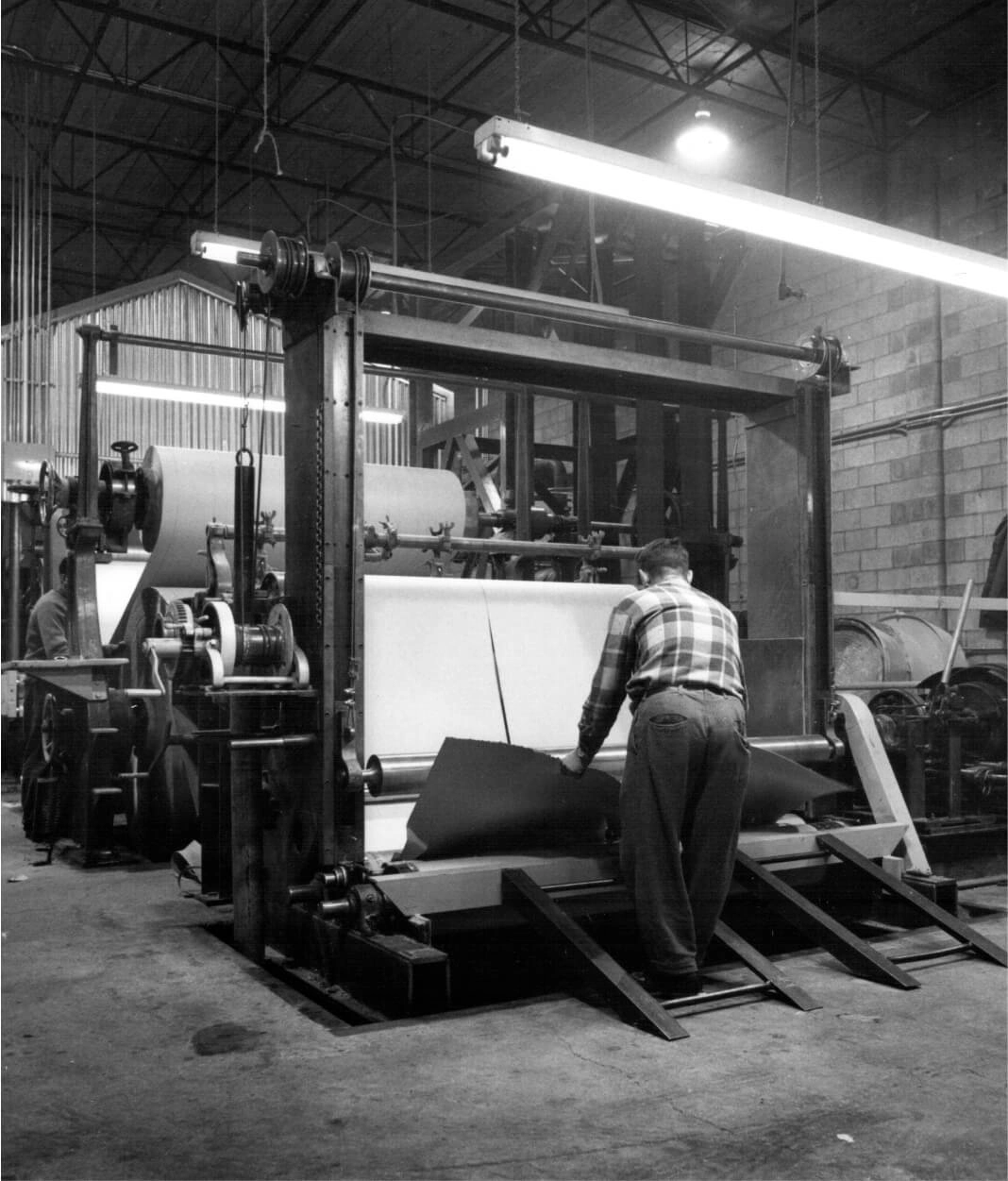
A: Shingles are made in a continuous web process. Large
rolls of felt are fed into a dry looper, which serves as an accumulator. The felt
then goes to the saturator tank. In the saturator tank, the felt is impregnated with
saturant asphalt. From the saturator tank, the felt moves to the wet looper, where
the saturant is drawn into the felt as it cools. This allows the felt to attain a
high degree of saturation and dries the surface of the sheet. The saturated organic
felt or the glass mat (glass mat shingles do not require the saturation process) moves to
the coater. At the coater, coating (asphalt with air blown through it) is applied to
the top and bottom surfaces of the sheet. Mineral stabilizers are added to the coating
which improve the shingle's fire resistance and weatherability. Next, granules are
applied to the top surface of coating. Granules are ceramically colored crushed
rock; the granules give the shingle its color, but more importantly protect the coating
from ultraviolet light. Backsurfacing is then applied to the sheet to prevent it
from sticking to the machine and to other shingles when packaged. The release tape
is also applied to the back of the sheet to prevent the sealant buttons from sticking to
the next shingle in the package. The granules are then pressed into the topcoating.
Once the sheet is cooled, sealant buttons are applied. The sealant buttons
allow one shingle to bond to the overlying shingle on a roof, to prevent wind
uplift. The roofing sheet is then measured and cut into shingles. At this
stage, the two pieces of laminated shingles are adhered together. The shingles are
wrapped into bundles and stored in the warehouse until they are ready to be shipped to the
appropriate location.
See article for more information.
Back To Top
Q: What are ice dams?
A: Ice dam formation is the result of continuous freezing and
thawing of snow due to escaping heat from the house or from gutters being backed up with
frozen slush. When this occurs, water may be driven under the roof which may cause
ceiling, wall, insulation and gutter damage.
See CASMA Technical Bulletin No. 10 (1996) or ARMA Form No. 215-RR-87 (1993) for more information.
Back To Top
Q: What can I
do about ice dams?
A: Ice dams can be preventing from forming by:
- Installing a vapor barrier above the home's warm space.
- Insulating the attic floor.
- Ventilating the attic.
Damage from ice dams, if they do form, can be reduced by:
- Removing debris from gutters so that it does not build up over time.
- Making sure that the outer edges of the gutters are lower than the slope line.
This will allow for snow and ice to slide clear.
- Installing eaves flashing, such as IKO's ArmourGard Ice & Water Protector
See CASMA Technical Bulletin No. 10 (1996) or ARMA Form No. 215-RR-87 (1993) for more information.
Back To Top
Q:
Can I use salt to remove the ice on my shingles?
A: Yes, but there are some drawbacks to doing this.
See CASMA Technical Bulletin No. 15 (1998) for more
information.
Back To Top
Q:
Can I use a shovel to remove snow and ice from my shingles?
A: Yes, but it is not recommended.
See CASMA Technical Bulletin No. 15 (1998) for more
information.
Back To Top