Table of Contents:
- Roofing Materials for Hail & Wind Protection
- What Are Impact-Resistant Shingles?
- Key Benefits of Impact-Resistant Shingles
- How Impact Ratings Actually Work
- When Impact-Resistant Shingles Are Worth It
- Choose the Shingle That’s Right for You
Roofing Materials for Hail & Wind Protection
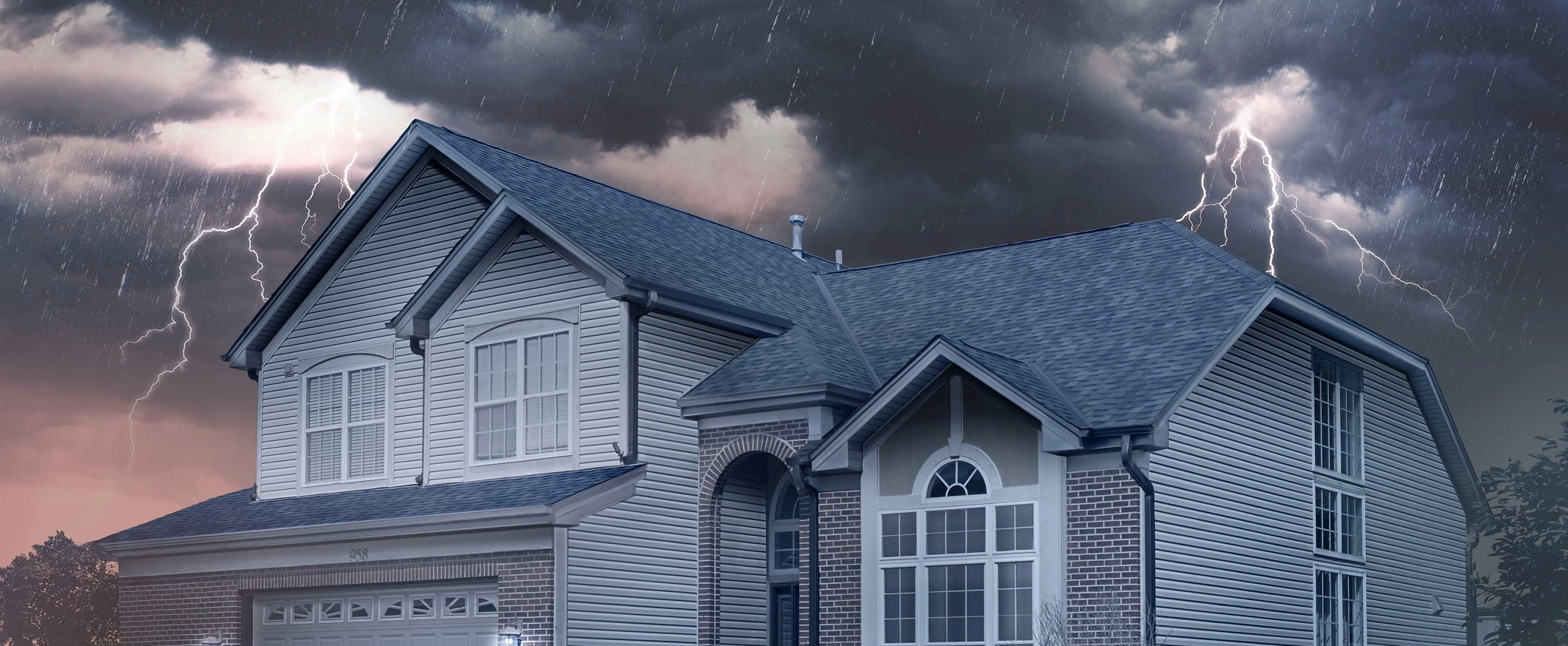
A recent hailstorm in Calgary caused an estimated $164 million in insured damage for homeowners. That’s just a fraction of the total picture — some estimates put annual losses stemming from hailstorms in the United States between $8 and 15 billion.
For homeowners in storm-prone areas, impact-resistant shingles are one of the most practical upgrades available to potentially help save money with insurance discounts. This guide breaks down how impact-resistant shingles work, how they’re rated and when the upgrade is worth the investment.
Note: Impact resistance ratings are solely for the purpose of enabling residential property owners to obtain a reduction in their residential insurance premiums, where available. These ratings are not a guarantee of impact resistance against hail, and damage from hail is not covered under the limited warranty.
What Are Impact-Resistant Shingles?
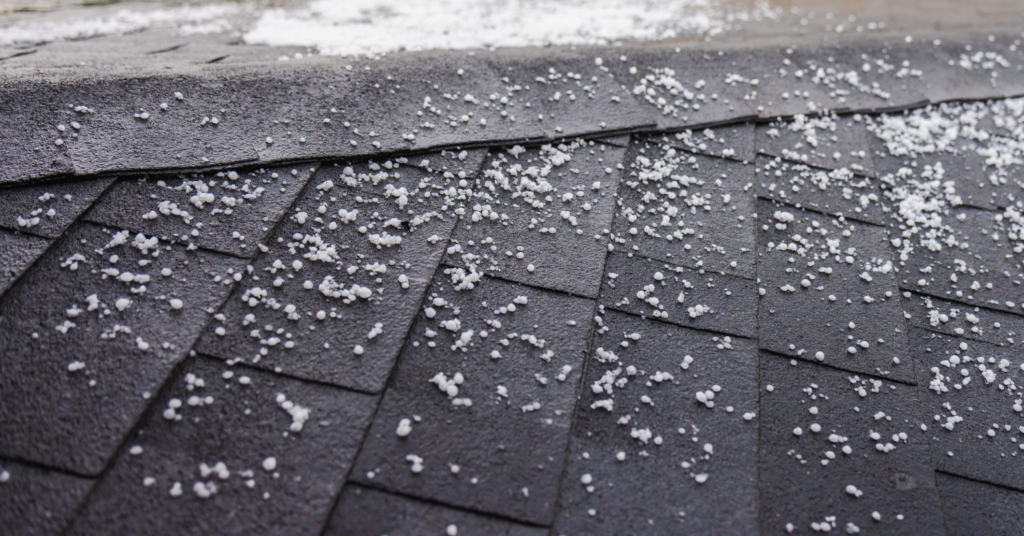
Impact-resistant shingles are specially designed to be more resistant to hail damage. They are manufactured to absorb and disperse the energy of falling hail without cracking or tearing.
How Are Impact-Resistant Shingles Made?
While there are many different types of roofing materials, most impact-resistant shingles used in residential settings are made of asphalt.
Asphalt impact-resistant shingles are typically made with polymer-modified asphalt. Many use styrene-butadiene-styrene (SBS), a synthetic rubber-based polymer that helps asphalt become more flexible to better handle impact from hailstones.
How Do Impact-Resistant Shingles Differ from Standard Asphalt Shingles?
While impact-resistant shingles are engineered with polymers and added layers of protection, standard asphalt shingles are not. Standard shingles are more prone to cracking and are not designed to disperse the force of impact from hailstones.
Key Benefits of Impact-Resistant Shingles
Hail-resistant roof shingles offer homeowners more than just storm protection — here’s what else they bring to the table.
- Lower Insurance Premiums: In certain areas, homeowners can qualify for insurance premium reductions for installing impact-resistant shingles on their roofs — State Farm mentions hail-resistant roofs and Class 4 shingles may offer homeowners’ insurance discounts.
- Peace of Mind: If you live in a severe storm-prone area, having shingles built to withstand impact means one less thing to worry about when the forecast takes a turn for the worse.
- Boosted Resale Value: Buyers in areas with severe storms pay attention to roof condition, age and quality of shingles. A newer impact-resistant roof is a major selling point that holds weight during inspection.
How Impact Ratings Actually Work
Impact ratings are on a scale from Class 1 to Class 4, governed by UL 2218 — the industry standard for impact resistance of roof covering materials. Each class corresponds to a specific steel ball size dropped from a set height, simulating the kinetic energy of a real hailstone.
| Class | Steel Ball Size | Drop Height | Simulated Hail Size |
|---|---|---|---|
| 1 | 32 mm (1.25 inches) | 3.7 m (12 feet) | ~25 mm (~1 inch) |
| 2 | 38 mm (1.50 inches) | 4.6 m (15 feet) | ~38 mm (~1.5 inches) |
| 3 | 44 mm (1.75 inches) | 5.2 m (17 feet) | ~44 mm (~1.75 inches) |
| 4 | 51 mm (2.00 inches) | 6.1 m (20 feet) | ~51 mm (~2 inches) |
A shingle passes if it shows no cracking, tearing or fracturing on the back surface after impact. Granule loss or denting visible only on the top doesn’t count as a failure under UL 2218.
Another standard some manufacturers also test against is FM 4473, where ice balls of a specified size and weight are propelled at a specified velocity to simulate the energy and impact of hail. Together with UL 2218, the two standards provide a more comprehensive view of shingle performance across varying impact scenarios.
Shingles that are Class 4 impact-resistant shingles are considered hail-resistant. While they hold a lower rating, Class 3 impact-resistant shingles, like IKO’s line of architectural shingles, are also considered hail-resistant.
Are Class 4 Shingles Impervious to Hail?
Class 4 roof shingles have the highest rating available and what most homeowners in hail-prone areas should target — but that doesn’t mean they’re indestructible. IBHS testing found that even Class 4 shingles showed some failure locations under the most severe impacts. The rating means a shingle met the certification threshold, not that every square inch survived without damage.
When Impact-Resistant Shingles Are Worth It
Are Class 4 shingles worth it? Impact-resistant shingles cost more than standard shingles upfront, but for many homeowners in stormy areas, the math works out. We talked to Ian Smith, owner of Omega Exteriors, to understand when homeowners should consider impact-resistant shingles.
High-Hail and Storm-Prone Areas
The National Severe Storms Laboratory (NSSL) shows hail events are concentrated heavily across the central U.S., like the Midwest and Texas. In Canada, severe hail is most frequent in Alberta, the southern Prairies and southwestern Ontario, according to CNA.
If you live in these places, investing in hail-resistant roofing is less of an upgrade and more of a common practice. Since these areas also see heavy rain and cold winters, pairing impact-resistant shingles with other roofing materials, like ice and water protectors, adds another layer of defense in these vulnerable areas.
Long-Term Homeowners
The longer you plan to stay in your home, the stronger the case for impact-resistant roof shingles. As Smith notes, “The cheapest it will ever be is today,” meaning installation costs only go up, and so does the damage exposure if you defer.
Insurance Savings Scenarios
Depending on where you live, some insurers offer an annual insurance discount for Class 3- and Class 4-rated roofs. Over a number of years, those savings add up fast. The discount varies by provider, so it’s worth calling your insurer before deciding.
Choose the Shingle That’s Right for You
Impact-resistant shingles won’t make your roof bulletproof — but they will make it significantly better equipped for whatever severe weather brings. If you’re ready to explore your options, IKO’s Nordic™ (Class 4 shingles) and Dynasty® (Class 3 shingles) are built for demanding climates. Talk to a local roofing contractor to find out which option is right for your home.